








7 Best Subscription Services for Design, Development & Business Support


Key takeaways
- Compare subscription services by their actual staffing, scope, and delivery capacity—not just the monthly headline price.
- Separate recurring fees from software, annual commitments, one-time onboarding, and quoted project costs.
- Review provider-reported client work, turnaround definitions, ownership terms, and communication before choosing a partner.
A monthly design service can clear a creative backlog. It may be less useful when the real problem is a website nobody can update, a sales pipeline disconnected from marketing, or an application that needs experienced engineering.
The best subscription services match the work you need to get done. Design subscriptions, creative teams, website specialists, marketing agencies, and software consultancies solve overlapping problems, but they do not sell interchangeable capacity.
This guide compares subscription services and ongoing agency partnerships across those models: Awesomic, WeGrow, Superside, Webstacks, SmartBug Media, thoughtbot, and Anika Labs. The aim is to help you build a shortlist around your workload, rather than declare a universal winner.
How we chose these services
We selected providers with distinct approaches to recurring creative or digital work and reviewed their own service pages. This is an editorial comparison, not a hands-on test of every team. Website screenshots illustrate each provider's positioning; they are not examples of work delivered to us.
Anika publishes this guide and is included in the comparison. That relationship does not make Anika the right choice for every brief. Best-fit recommendations below are our assessment of the advertised scope, rather than independent performance ratings.
Service descriptions and screenshots were checked in November 2026. Confirm current capacity, contract terms, and deliverables with each provider. Published prices below are in USD and reflect the pages reviewed, not binding quotations. We separate recurring subscriptions from one-time onboarding or project fees. Capacity, tax, software, and commitment terms can change the final cost.
The shortlist at a glance
| Provider | Service model | Strong reason to shortlist | Establish before signing |
|---|---|---|---|
| Awesomic | Platform combining AI tools and expert support | Flexible routes from an initial idea to creative or digital execution | Which expert services and implementation work your chosen plan includes |
| WeGrow | Senior design subscription and defined projects | Brand, web, and product work for B2B AI businesses | Active workstreams, build scope, and prioritization |
| Superside | Enterprise creative subscription | A broad creative production relationship for an established marketing team | Budget allocation, commitment, specialist production costs, and approvals |
| Webstacks | Website projects and ongoing website teams | Continuous improvement of a B2B marketing website | Technical ownership, roadmap, integrations, and support |
| SmartBug Media | Digital marketing and HubSpot services | Connecting campaigns with CRM and revenue operations | Deliverables, software costs, implementation scope, and reporting |
| thoughtbot | Product design and software consultancy | Building or improving a software product with an experienced team | Team allocation, discovery, technical responsibilities, and handover |
| Anika Labs | Ongoing multidisciplinary support and quoted projects | Coordinating design, development, growth, and business systems | Plan scope, specialist availability, and delivery capacity |
The rows are different buying categories. A creative subscription should not be marked down simply because it is not a software engineering team. Equally, an engineering consultancy is not automatically good value for a steady queue of social graphics.
What do these subscription services cost?
| Provider | Published price reference | What that number actually buys |
|---|---|---|
| Awesomic | Graphic Pack $1,799/month; All-in-One $3,219/month | Expert-service plans; per-person AI plans are a separate product |
| WeGrow | Retainer from $4,900/month; projects from $9,000 | Base retainer has one workstream; a project is a separate fixed-scope purchase |
| Superside | $15,000 monthly minimum on an annual term; Dedicated from $30,000/month | Confirm the total including the separately stated $1,000/month software fee |
| Webstacks | Scoped quotation | Retainer allocation, disciplines, and commitments must be specified |
| SmartBug Media | Ongoing work by quotation; onboarding examples from $4,250 | Published onboarding fees are not monthly retainers or software licences |
| thoughtbot | Scoped proposal | Product, design, and engineering allocation rather than a standard graphics queue |
| Anika | Site $1,495; Build $2,995; Partner $4,995 per month | Different active-project capacity; fixed-scope projects are quoted separately |
These references come from the linked provider pages in the profiles below. They are a starting point for scoping, not a cheapest-to-most-expensive ranking. A specialist team, a part-time creative service, and a software tool do not represent the same purchase.
1. Awesomic: flexible creative and expert support
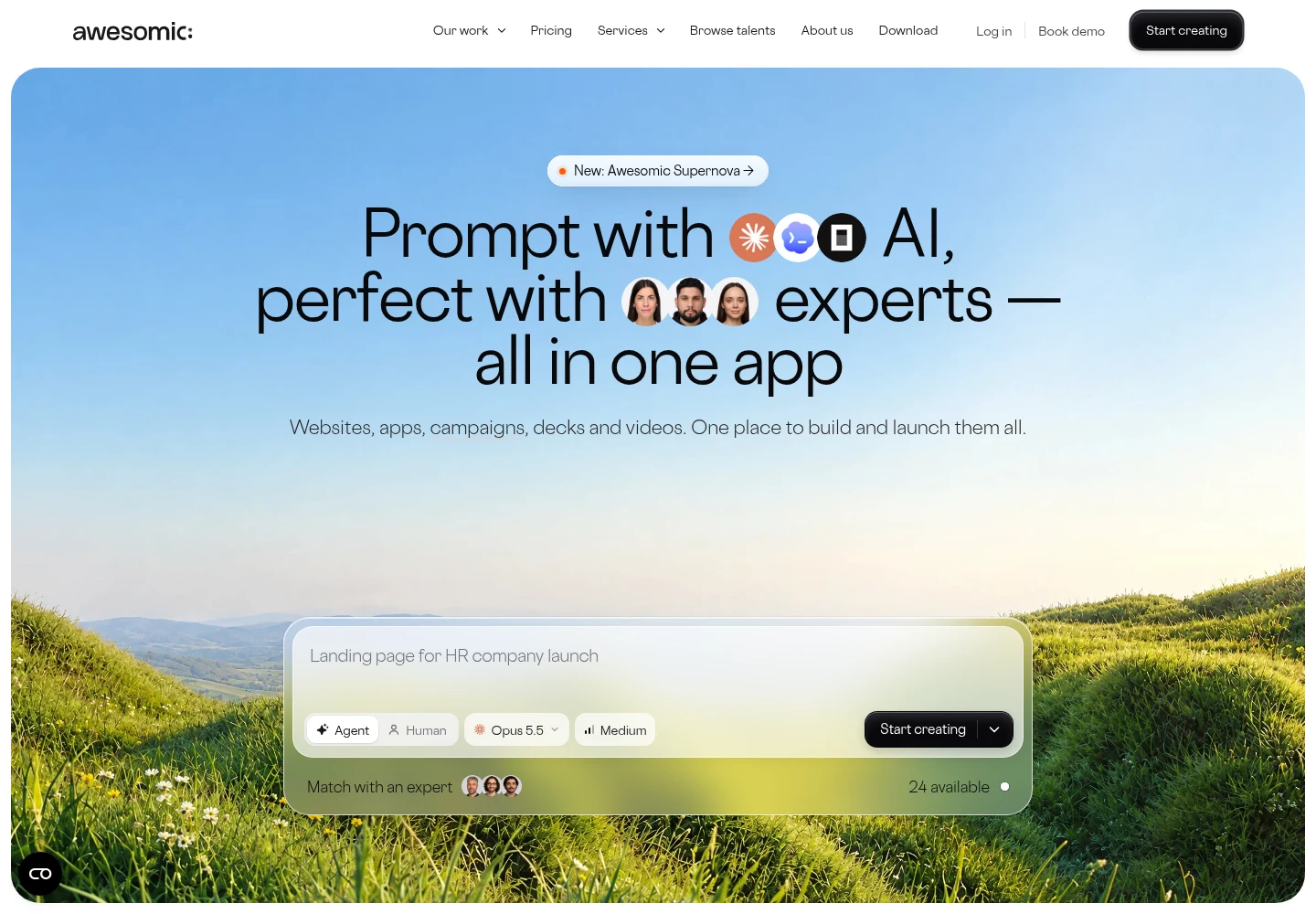
Awesomic combines AI tools with separately purchased expert support. Its current positioning covers sites, apps, campaigns, presentations, and video. That breadth makes it worth investigating for a startup moving between creative tasks and implementation, provided the selected expert plan matches the work.
Services and capacity. Graphic Pack focuses on everyday graphics; All-in-One adds design, copywriting, no-code development, and quality checks. A dedicated expert arrangement is a separate option. The distinction matters: access to an AI development environment is not equivalent to buying a full-time software engineer. Review the current expert-plan comparison.
Pricing and commitment. The pricing page lists Graphic Pack at $1,799/month, All-in-One at $3,219/month, and dedicated experts by quotation. It separately lists per-person AI plans from $19/month; expert subscriptions include one Light plan. Do not use the AI entry price as the cost of an outsourced team. Quarterly options are advertised; confirm the selected billing interval and its cancellation terms.
Workflow and turnaround. Awesomic advertises expert matching within 24 hours. That is a staffing milestone, not a promise that a complex website will be complete within a day. Ask for the expected first deliverable, revision cadence, working-hour overlap, and deployment responsibilities for your actual brief. Source: pricing and operating model.
Track record. Its Denario case study documents animation, illustrations, social assets, and a multilingual Webflow migration across a year-long relationship. That is useful evidence of work spanning several formats. Denario's later acquisition by PandaDoc should not be treated as proof that design caused the acquisition.
Best for. Founders and lean teams that need a flexible path from ideas to creative or no-code delivery, with expert help available alongside tools.
Main tradeoff. Compare the human service you will receive, not the size of the tool catalogue. If you want a fully delegated department, ask how much direction, account administration, and final QA still belongs to your team.
Before signing: Request a sample weekly workload, the number of active tasks, editable-file handover terms, and the cost of adding a specialist outside your plan.
2. WeGrow: senior design support for B2B AI businesses
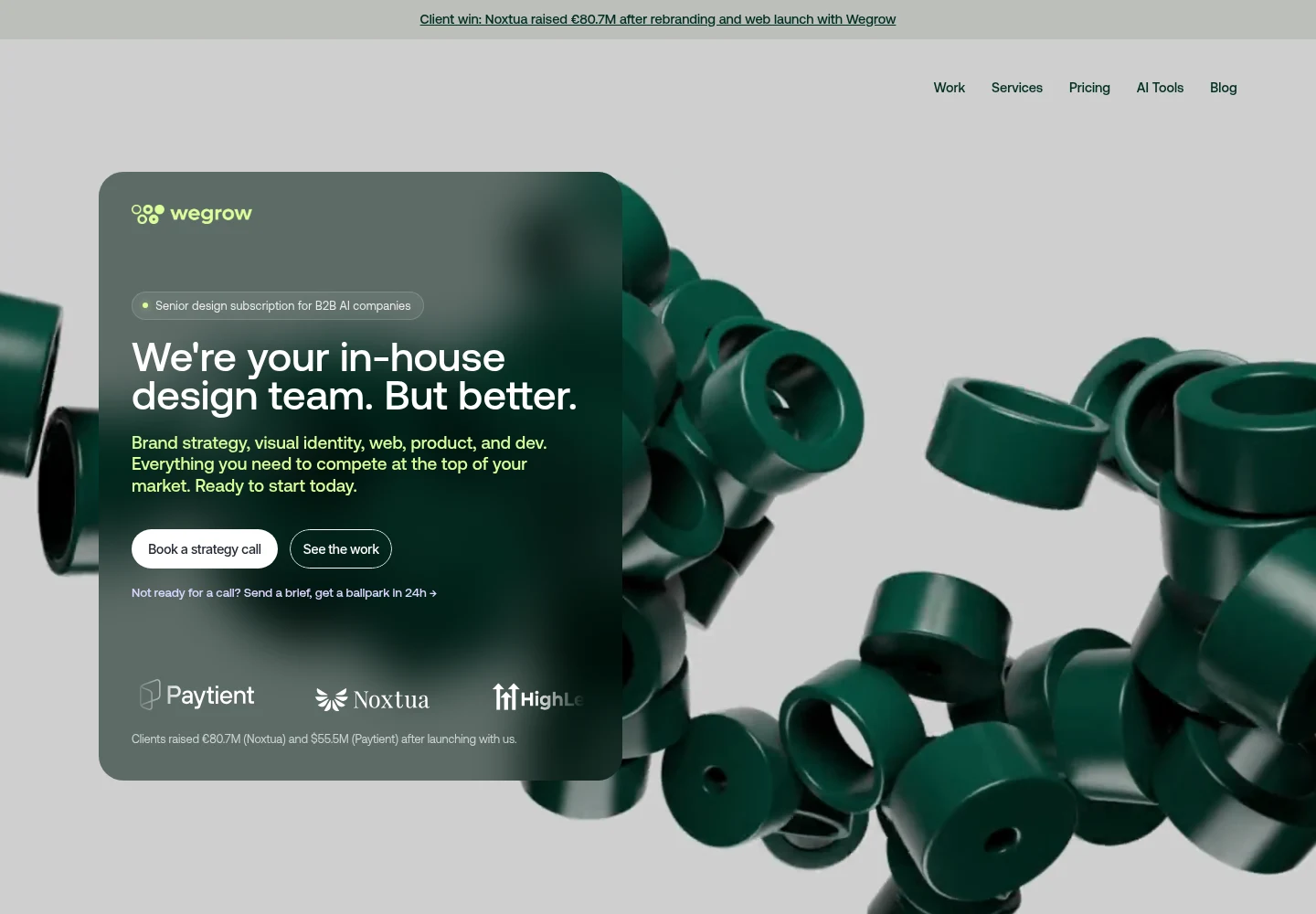
WeGrow offers a focused proposition for businesses whose brand, website, and product presentation need to develop together. Its sector emphasis makes it particularly relevant when a technically complex product needs clearer positioning.
Services and capacity. The offering spans brand, web, product, motion, and development, with one workstream in the base retainer.
Pricing and commitment. The retainer starts at $4,900/month; defined projects start at $9,000. WeGrow advertises scaling, pausing, or cancelling, and an 80% refund during the first-week trial, with no refunds after that week. Source: WeGrow's services and FAQ.
Workflow and turnaround. WeGrow describes a strategy call, shared priorities, updates every few days, and ongoing revisions. Ask for a completion estimate for your particular brief. Source: workflow FAQ.
Track record. Its selected work includes brand and website projects for Noxtua and Paytient. View WeGrow's published work.
Best for. A B2B AI company that needs a senior team to maintain a coherent brand across a website, product interface, and launch material.
Main tradeoff. One focused workstream can be a useful operating discipline, but it creates a planning constraint. If the product team, sales team, and founder all need urgent work, establish who sets priorities and what additional parallel capacity would cost.
Before signing: Confirm editable files, site-account ownership, the build platform, review availability, and the notice required to pause. For a custom application, distinguish interface design from engineering before assuming both fit the retainer.
3. Superside: enterprise creative subscriptions at scale
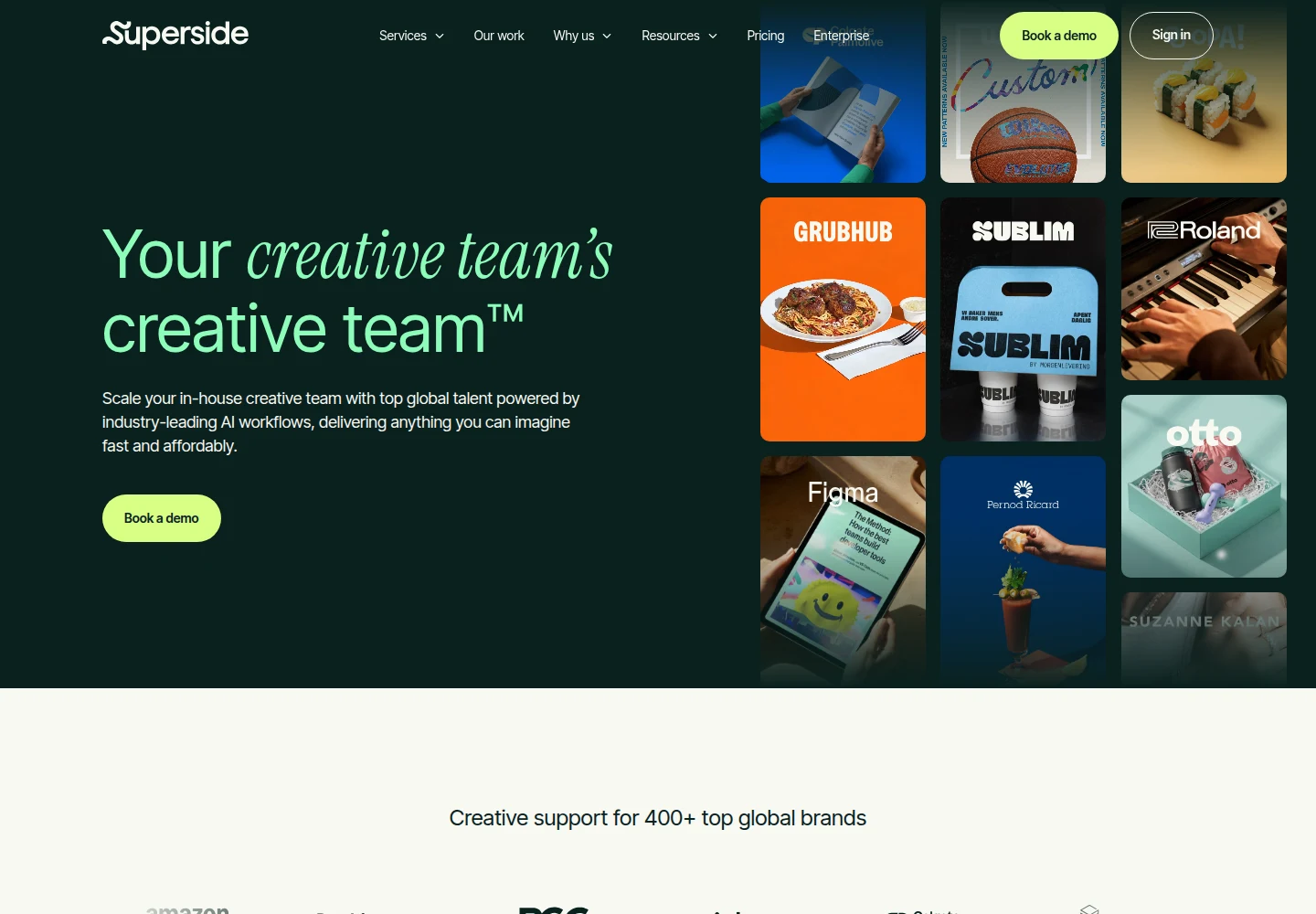
Superside is most relevant when an established internal department needs external creative capacity across formats. The commercial comparison is closer to maintaining a production relationship than hiring someone for occasional requests.
Services and capacity. Superside covers creative strategy, design, video, motion, and specialist production. Flex resources vary with the work; Dedicated keeps a consistent team. Source: services and subscription model.
Pricing and commitment. The pricing FAQ states a $15,000 monthly minimum on an annual term. It separately identifies a $1,000/month software fee; ask for a written total showing how the minimum applies. Dedicated starts at $30,000/month plus that software fee, on a 12-month term. Flex budget can roll over for up to three months. These are material differences from a month-to-month request queue. Source: current pricing FAQ.
Workflow and turnaround. Superside describes onboarding and an initial project within the first few weeks. That is distinct from subsequent asset turnaround. For ongoing work, obtain estimates by format and complexity, including the effect of approval delays. Source: onboarding terms.
Track record. The Forter customer story describes event illustrations for a 30,000-square-foot venue delivered in under three weeks, alongside motion templates and demo animation. This is a provider-reported project example, not an SLA for every event or video brief.
Best for. Enterprise marketing and brand teams with sustained demand for varied creative work and an internal owner able to direct priorities and approve output.
Main tradeoff. Specialist breadth and production coordination come with a substantial commitment. Before comparing monthly numbers with another provider, model the annual cost, software fee, expected utilization, and any overages.
Before signing: Ask who approves estimates, what revisions consume budget, how unused capacity expires, whether urgent work displaces planned work, and which source files and usage rights are included.
4. Webstacks: a website product team on retainer
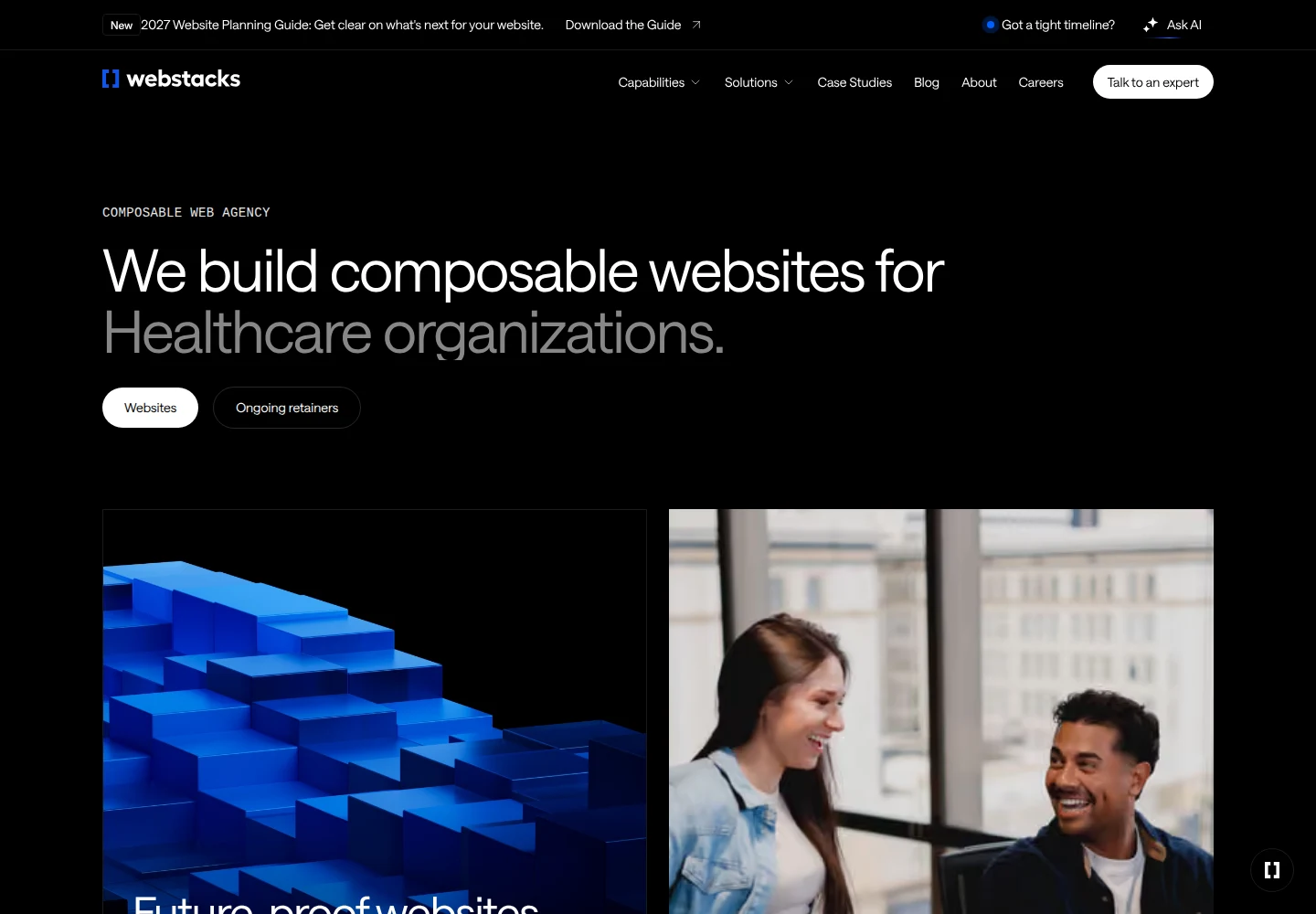
Webstacks is an option when the ongoing bottleneck is the marketing website itself: releases take too long, content editors depend on engineers, or a growing business needs more adaptable templates and integrations.
Services and capacity. Its Website Product Team combines web strategy, design, engineering, and project management. The retainer separates larger roadmap initiatives from smaller ongoing improvements. This is website-focused capacity, not a promise to operate every marketing channel.
Pricing and commitment. The reviewed retainer page does not publish a standard monthly starting price. Request a scoped quotation covering allocation, roles, minimum term, and overages. A budget without an agreed team or hours is too vague to compare with another service. Source: retainer offering.
Workflow and turnaround. Webstacks describes sprint-based delivery, weekly reporting, shared dashboards, and a relationship-owning project manager. Its page gives illustrative effort estimates for initiatives, including roughly 60 hours for a pricing-page redesign and testing programme. Those examples are planning illustrations, not delivery guarantees or prices. Source: operating model.
Track record. Its Calendly case study discusses redesigning the design system, improving the content model, adding templates for enterprise buyers, and continuing work through a Website Product Team. The example is relevant to a company changing how it sells while needing its website to keep pace.
Best for. B2B businesses with a technically substantial marketing site and a continuing roadmap, especially when publishing autonomy, a shared design system, and integrations matter.
Main tradeoff. The team's website focus is valuable if that is your priority. If your backlog is mostly sales outreach, social graphics, or internal product engineering, a different model may use your budget more effectively.
Before signing: Agree ownership of repositories and CMS accounts, the incident-support boundary, release frequency, analytics responsibilities, and how much allocation remains for urgent fixes after planned initiatives.
5. SmartBug Media: ongoing support connecting marketing and business systems
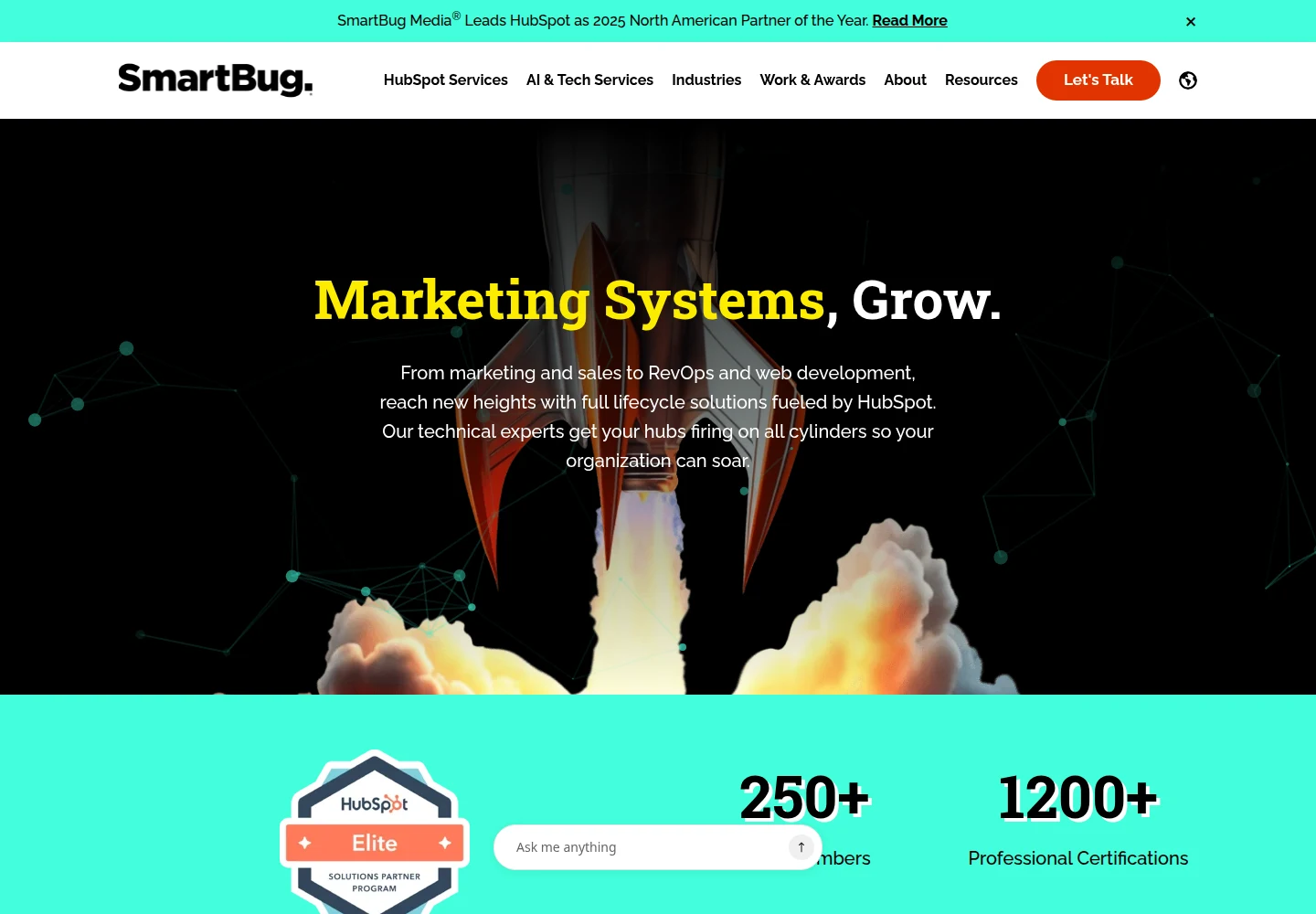
SmartBug belongs on a broader subscription-services shortlist when the buyer needs campaigns, customer data, and sales processes to work together. A team can produce plenty of creative work and still lose opportunities through poor lead routing or an unreliable CRM setup.
Services and capacity. Its published scope includes digital marketing, websites, HubSpot administration, migrations, integrations, revenue operations, and related implementation. Establish which disciplines are staffed in your proposal; the full agency service list is not automatically the scope of an individual engagement. Source: SmartBug services.
Pricing and commitment. A general monthly retainer price was not published on the service pages reviewed. There are concrete onboarding prices: Marketing Hub and Sales Hub from $4,250 each, Service Hub from $6,500, and Multi-Hub from $12,000. These are listed package starting prices, not monthly agency subscription rates or HubSpot licence prices. Ongoing scope and billing need a separate quotation. Source: onboarding packages.
Workflow and turnaround. The onboarding page describes setup, configuration, automation, reporting, and training, with a typical four-to-12-week onboarding period. That timeframe concerns implementation, not the time needed to achieve an SEO or revenue result. Source: onboarding FAQ.
Track record. Its VectorUSA case study reports a 56% increase in website users and 216% growth in open opportunities from web traffic after 10 months. These are SmartBug's reported client outcomes, not independently reproduced results or forecasts for a new customer.
Best for. Businesses that want to connect marketing execution with CRM adoption, sales handoffs, automation, and measurable reporting.
Main tradeoff. A platform-centred relationship can be valuable, but the full budget may include agency fees, software, migration, media spend, and training. Establish the total operating cost and access to your data before committing.
Before signing: Confirm which hubs and integrations are included, who owns CRM configuration, how results are attributed, and what ongoing administration is available after onboarding.
6. thoughtbot: continuing product design and engineering expertise
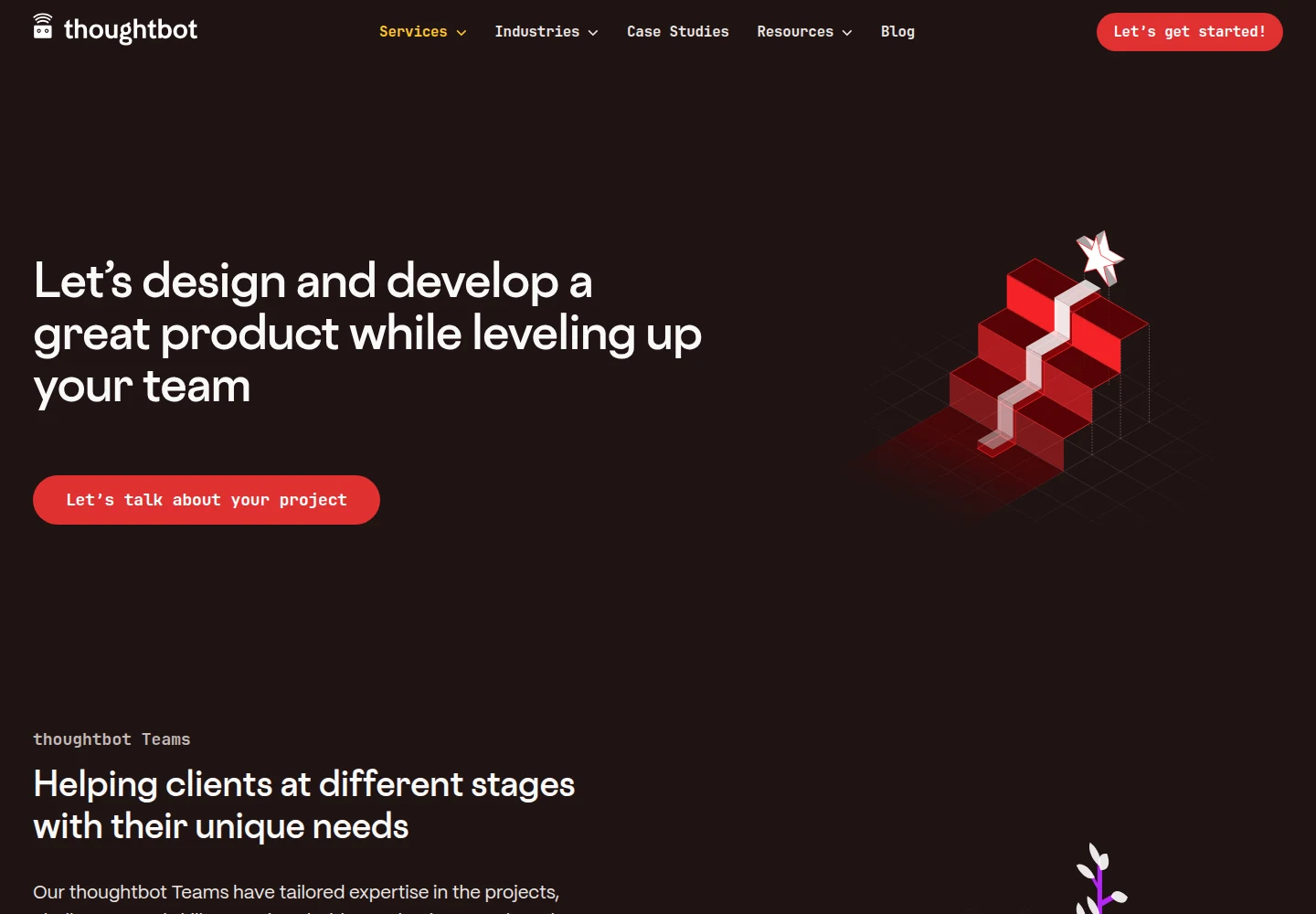
thoughtbot is a software consultancy rather than a standardized creative subscription. It is included because some businesses searching for ongoing digital support actually need a product team, technical leadership, or sustained engineering help.
Services and capacity. Its published services include product strategy, UX/UI, design systems, web and mobile development, maintenance, team augmentation, and fractional leadership. Its team model addresses both early product work and existing teams that need additional expertise. Source: thoughtbot services.
Pricing and commitment. The service pages reviewed do not provide a universal monthly subscription price. Ask for a proposal describing the engagement unit, named roles, allocation, minimum commitment, and notice period. Do not compare a consultancy budget with a creative plan until both describe an equivalent outcome.
Workflow and turnaround. The public planning playbook describes weekly iterations, daily syncs, visible priorities, and frequent small releases. That is a delivery cadence rather than a guarantee of a fixed number of features. For a software engagement, discuss reviewable releases, test coverage, deployment, and support responsibilities.
Track record. The Distribute case study documents a two-week discovery sprint producing a product direction, prototype, research plan, and technical recommendations. The outcome was preparation for validation and fundraising discussions; it was not a fully launched application in two weeks.
Best for. Businesses developing a software product, resolving product uncertainty, or improving their internal engineering capability through an experienced partner.
Main tradeoff. A collaborative product team requires an engaged customer owner. If you need a mostly asynchronous queue of finished marketing assets, product discovery and engineering rituals may be unnecessary overhead. If you are handling permissions, payments, and operational data, those disciplines may be central to the purchase.
Before signing: Establish code and infrastructure ownership, security responsibilities, team overlap, review practices, ongoing maintenance, and how knowledge will transfer to your own staff.
7. Anika Labs: subscription support across design, development, and business operations
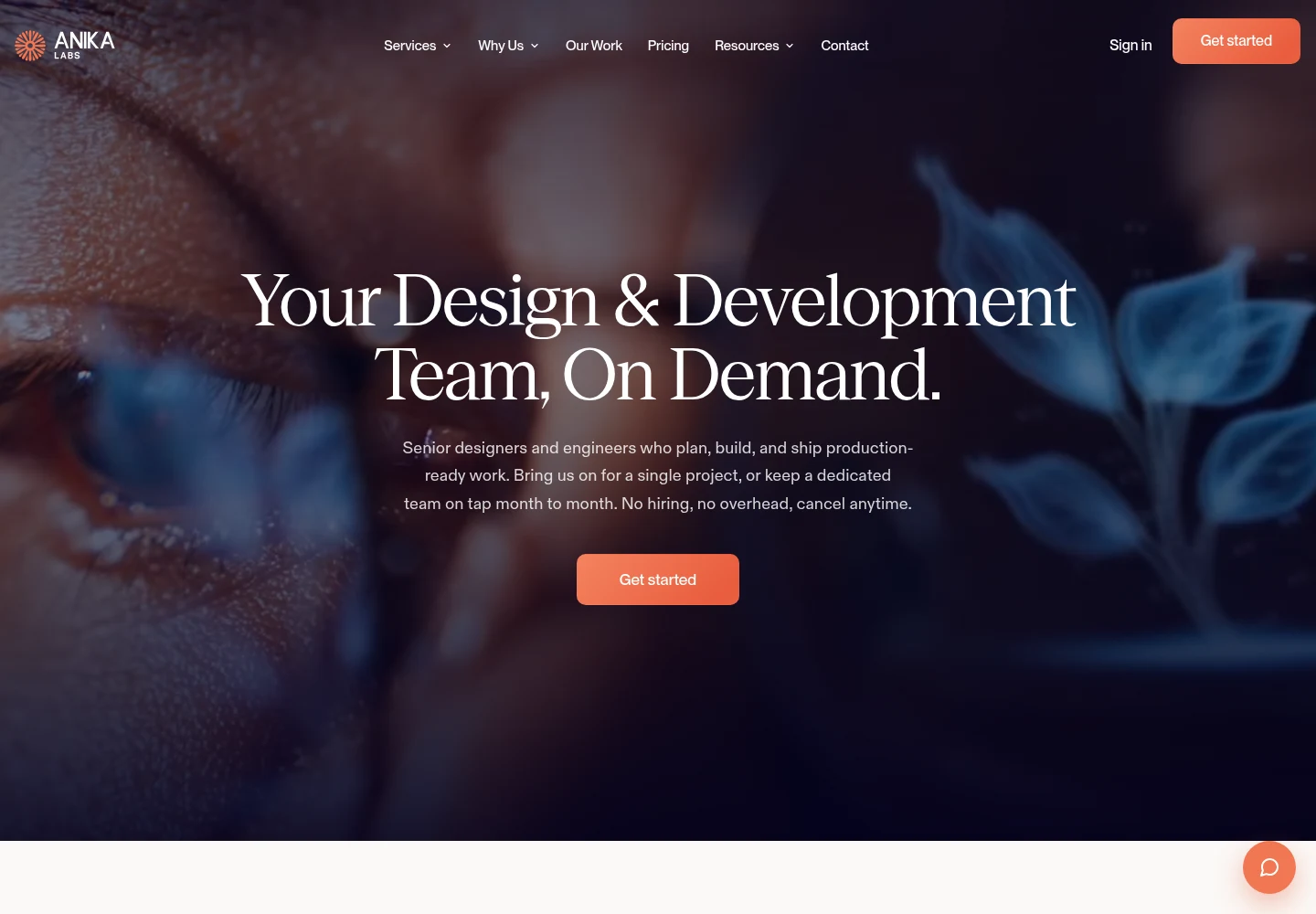
Anika's proposition is a connected delivery relationship across creative work, technology, growth, and business systems. It is relevant when the work crosses departmental boundaries: a new website may also need lead routing, reporting, integrations, and a better internal process.
Services and capacity. The published plans cover design, branding, development, growth support, and automation, with applications, portals, and internal tools on higher tiers. Partner also lists operational systems and business operations staffing. Confirm the actual role, availability, and responsibilities of any operational staff in your scope. Source: Anika plans.
Pricing and commitment. Monthly pricing is Site $1,495, Build $2,995, and Partner $4,995. Site lists one active project, Build three, and Partner multiple priority workstreams. Quarterly and yearly savings are advertised separately. Fixed-scope work is available by quotation. Requests and revisions are unlimited, but active delivery capacity remains plan-dependent. Source: current plan comparison.
Workflow and turnaround. Anika describes discovery, direction-setting, connected design and development, testing, launch, and ongoing improvement. The plan page distinguishes priority levels; it does not establish one completion time for every task. Agree the first milestone, review cadence, and dependencies for your project. Source: how Anika works.
Track record. Review the published portfolio against the kind of work you need, then request a relevant walkthrough and delivery evidence. This guide does not claim a benchmark for Anika's turnaround, conversion improvement, or client revenue: no comparable independently verified dataset is presented here.
Best for. Small and growing businesses seeking coordinated support across a website, applications, integrations, and operational workflows, with scope evolving over time.
Main tradeoff. Broad access to disciplines still requires prioritization. A plan supporting several types of work does not provide unlimited simultaneous staffing. A specialist may be a better fit for a narrow requirement demanding deep expertise in one platform or production format.
Before signing: Map your backlog to the tier, define an active project, identify any additional software or support costs, and confirm file, account, and repository handover.
Subscription, retainer, or project: which should you buy?
Start by examining the shape of the work over the next three months.
Choose recurring creative capacity when the backlog is repeatable. An internal marketer with clear briefs and regular demand for campaign assets can assess a creative service through accepted output, revision effort, and time to delivery.
Choose an ongoing specialist when one platform is the bottleneck. A website with complex content, experiments, and integrations benefits from continuity. The supplier learns the architecture and can improve shared foundations instead of rebuilding isolated pages.
Choose a broader agency relationship when several functions must move together. A campaign may need positioning, copy, design, a landing page, tracking, and follow-up automation. Establish which parts the agency owns and which remain with your team.
Choose a defined project when the result has a clear boundary. A migration, brand identity, or initial application may need discovery and milestones before an ongoing arrangement makes sense. Monthly billing alone does not make uncertain scope predictable.
Choose a product team when the work is software. Authentication, permissions, billing, and operational data require engineering ownership. A beautiful prototype is valuable, but it does not demonstrate a production-ready system.
Compare the total operating cost
A lower subscription price can become expensive if your team spends substantial time rewriting briefs, fixing output, or coordinating missing specialists. Conversely, paying for broad capacity makes little sense if only one narrow service is used.
Build a like-for-like brief and ask every shortlisted provider to explain its approach. Include the expected outputs, dependencies, review responsibilities, and required implementation work. A useful sample might combine one landing page, a small campaign asset set, and the lead-routing workflow behind the form.
Then compare:
- Available capacity: active tasks or workstreams, assigned roles, and what changes during a busy month.
- Completion criteria: whether delivery means a design file, approved copy, a working build, or a live and tested workflow.
- Additional costs: software, hosting, advertising, stock assets, specialist production, and maintenance.
- Your team's time: briefing, approvals, content preparation, testing, and administration.
- Contract flexibility: notice periods, pauses, rollover, minimum commitments, and project cancellation terms.
- Ownership and continuity: source files, repositories, accounts, documentation, and the process for moving to another supplier.
Turnaround claims need context. Ask whether the advertised time covers a first draft, a simple request, or a completed deliverable. A request that depends on missing content or account access cannot be scheduled like a routine resize.
Ownership, revisions, and communication: compare the contract too
A subscription is easier to evaluate when you separate the deliverable from the operating arrangement. Two services can advertise the same asset types while giving the customer very different responsibilities.
Editable files and ownership. Ask whether handover includes source artwork, design components, working code, fonts, stock licences, and documentation. Clarify when rights transfer, which third-party restrictions survive, and whether your team controls hosting and software accounts. A rendered preview alone is not an adequate handover for a website you need to operate.
Revisions and scope changes. Unlimited revisions may still use a finite budget or occupy the only active workstream. Ask what happens if a new stakeholder changes the approved direction. Compare the cost of reaching an accepted result, including review time, rather than treating revision wording as a production guarantee.
Timezone overlap. Global coverage does not automatically mean your assigned specialist works your business hours. Request the actual overlap, response window, holiday coverage, and escalation route. A team that is excellent for asynchronous production may be a poor match for a launch requiring simultaneous technical decisions.
Continuity. Find out whether the same people retain brand and technical context, how replacements are introduced, and where decisions are recorded. Continuity is especially important for complex websites and internal tools: missing context can create expensive rework even when the incoming specialist is capable.
Evidence. Read case studies for what was actually delivered, over what period, and under which conditions. A first draft in a day, a prototype in two weeks, and a production application after months of collaboration are different achievements. Provider-reported outcomes are useful evidence to investigate, but they do not establish a forecast for your business.
Test the working relationship with a representative brief
If you run a paid pilot, choose something that resembles the work you will actually commission. A single social graphic provides little evidence about a partner's ability to deliver a website integration.
Give the team enough context to make meaningful decisions: the audience, business objective, existing brand material, technical constraints, and a named approver. Check how it handles uncertainty. A useful partner asks about missing requirements before turning assumptions into finished work.
Review the accepted result and the process together. Was the work accurate? Did feedback survive revisions? Were blockers raised early? Could your team maintain what was delivered? Did the proposed capacity fit reality?
Those observations are more useful than a ranking based on the number of services listed on a homepage.
Questions to ask before you commit
Does unlimited design mean unlimited output?
No. A provider may accept unlimited requests while limiting active work, available hours, specialist access, or production capacity. Ask for the constraints in writing and apply them to your expected workload.
Can a design subscription include development?
Some services include implementation, but the scope varies. A hosted marketing page, custom application, CRM integration, and ongoing infrastructure support are different responsibilities. Confirm each required capability.
Is a full-service agency always the better choice?
No. Breadth helps when tasks are connected and someone coordinates them effectively. A specialist may be a stronger fit for a difficult technical problem, a particular creative format, or a platform that needs deep experience.
How should a small business narrow the shortlist?
Name the largest current bottleneck, establish a realistic budget, and identify who will manage the relationship internally. Compare two or three providers against the same brief. Buy the capacity you can use and the responsibility you need.
Choose around the work, then the commercial model
Awesomic, WeGrow, and Superside offer different approaches to ongoing creative support. Webstacks concentrates on websites; SmartBug connects marketing with CRM services; thoughtbot addresses product and engineering needs. Anika offers a broader relationship across related digital functions.
The right choice is the provider whose team, scope, and operating model match your next stage. Start with a real backlog, make responsibilities explicit, and judge the engagement on completed work your business can use.