








- →Modern creative agencies do not use artificial intelligence to cut artistic corners; they deploy automated pipelines to eliminate routine production toil.
- →Brand-grounded generative models and fine-tuned style weights enable teams to produce localized campaign assets in minutes rather than weeks.
- →Prevent creative decay by separating conceptual human art direction from mechanical visual asset generation.
- →Establishing rigorous quality scorecards and human-in-the-loop review gates ensures 100% brand fidelity across all commercial channels.
The traditional creative agency model is buckling under modern commercial demands. High-growth enterprises no longer need a single seasonal billboard campaign; they need seventy localized variants, thirty responsive digital display ad sizes, dynamic email graphics, and refreshed landing page illustrations every week.
Faced with this insatiable demand for visual content, legacy design teams face a painful dilemma: either balloon headcount costs to unsustainable levels or burn out senior designers with mind-numbing asset production grunt work.
The emergence of enterprise generative intelligence has radically shifted this equation. Leading creative studios are not laying off their senior designers; they are transforming them into high-leverage creative directors equipped with brand-grounded generative pipelines.
By stripping away repetitive manual chores (resizing artboards, cutting out image backgrounds, rendering basic lighting variants), an AI-native design team ships at four times traditional velocity while maintaining uncompromising aesthetic taste.
The Production Bottleneck: Why Manual Workflows Are Broken
In a legacy design studio, less than 25% of an art director's week is spent on conceptual strategy, emotional tone, and narrative storytelling. The remaining 75% is consumed by pixel-level execution: hunting for stock photography, masking hair in Photoshop, manually repositioning layout elements across 15 screen sizes, and exporting assets for engineering handoff.
Rigorous economic analysis published by McKinsey & Company on generative AI and economic productivity highlights marketing and design as prime vectors of automation, with generative tools unlocking up to $4.4 trillion annually in global economic value.
The 4 Core Systems of an AI-Native Creative Studio
To achieve exponential output without suffering the aesthetic genericization common to raw AI outputs, modern design organizations operationalize four technical capabilities:
1. Proprietary Brand-Trained Style Models
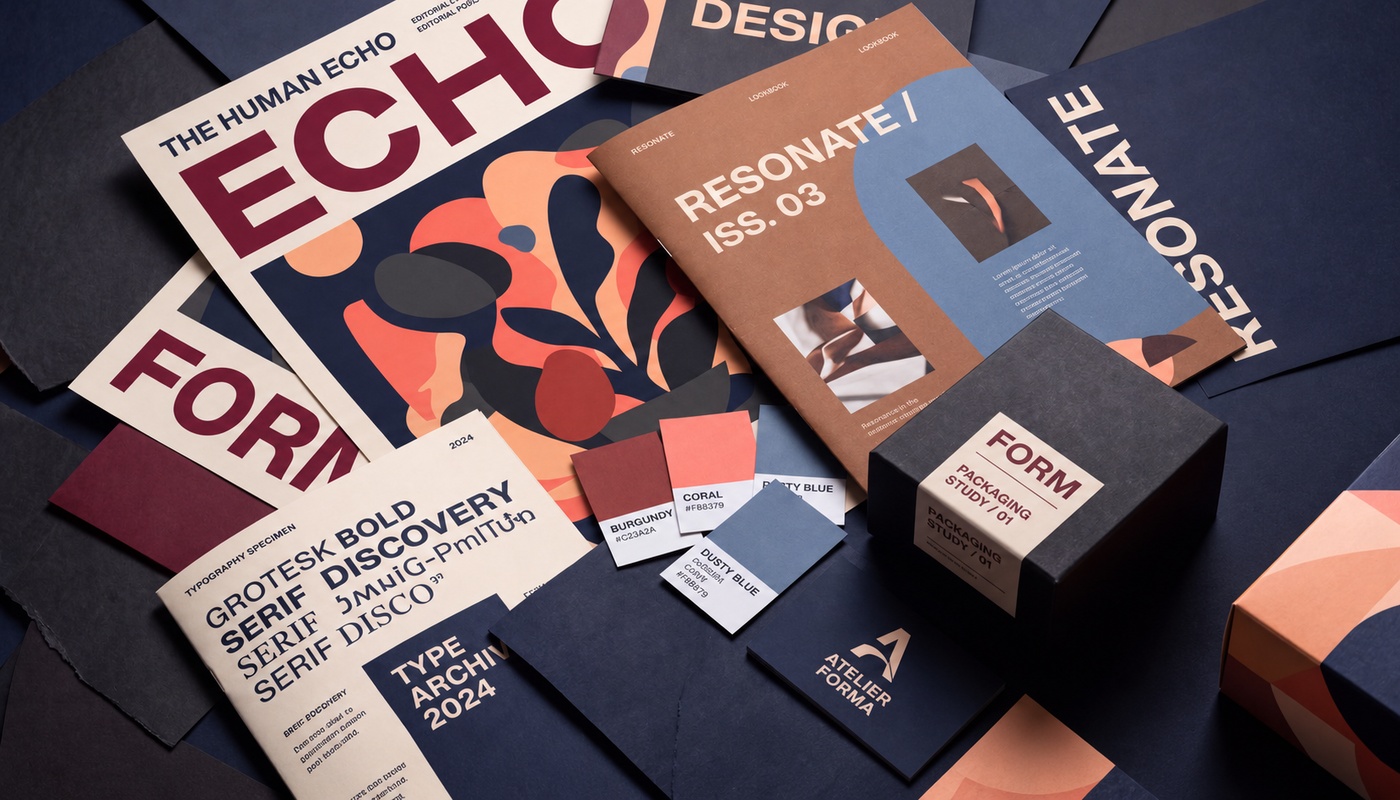
Off-the-shelf generative models produce generic, plastic imagery that screams "AI-generated." Enterprise design teams avoid this by training custom Low-Rank Adaptation (LoRA) weights and aesthetic embeddings on their specific brand portfolio: studio photography, lighting rules, color palettes, and architectural guidelines.
Instead of typing vague prompts into public bots, art directors generate imagery grounded in their exact physical textures and art direction specifications.
2. Composable Prompt Engineering Pipelines
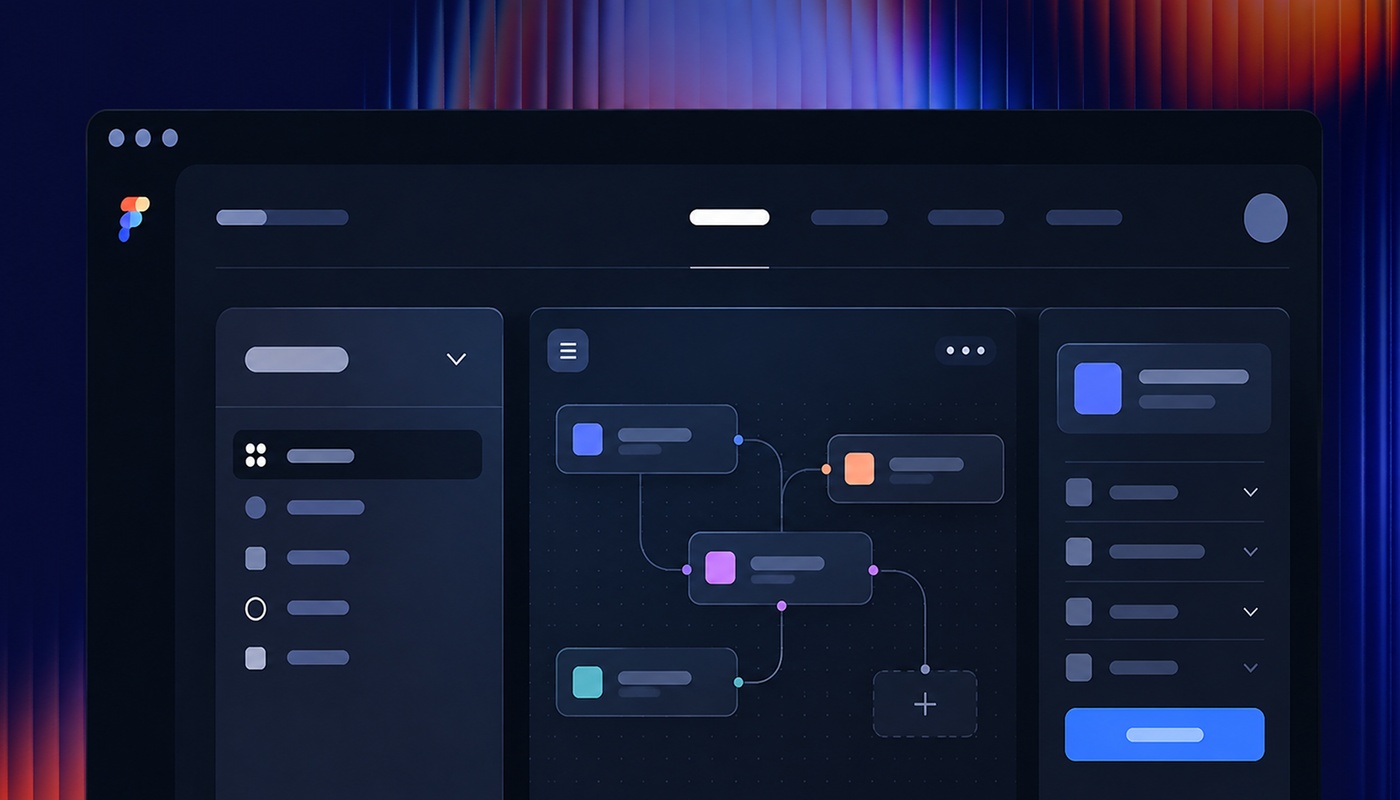
Prompting in a professional studio is not a trial-and-error guessing game. Teams construct parameterized prompt pipelines in tools like ComfyUI and Figma plugins.
These pipelines automatically inject negative prompt safety guardrails, camera focal length specifications, lighting temperature tokens, and brand color hex constraints into every generation pass, ensuring mechanical reproducibility across team members.
3. Human-in-the-Loop Curation and Polish
As explored in Harvard Business Review on human-machine collaboration, the greatest efficiency gains occur when machine speed collaborates with human critical judgment.
Generative engines produce twenty lighting ideas in seconds, but human art directors evaluate emotional nuance, historical context, and conceptual wit. The output of an AI pass is never treated as a finished deliverable; it is raw photographic footage ready for typography, vector styling, and retouching in Figma and Photoshop.

4. Automated Multi-Platform Asset Delivery
Once a primary campaign visual is approved, generative expansion pipelines automatically extend background canvas aspect ratios (from 16:9 desktop banners to 9:16 mobile reels), upscale images to crisp 4K print resolution, and generate localized translations without requiring an art director to open an artboard.
Architectural Comparison: Traditional vs. AI-Native Studio
| Workflow Stage | Traditional Design Studio | AI-Native Enterprise Studio |
|---|---|---|
| Concept Exploration | 3 to 5 hand-drawn or moodboard sketches | 100+ high-fidelity photographic variations in 15 minutes |
| Asset Sourcing | Stock photo licensing and heavy Photoshop retouching | Custom on-brand generation via proprietary fine-tuned models |
| Variant Production | Junior designers manually resize 40 canvas dimensions | Headless scripts generate responsive ratios automatically |
| Quality Control | Subjective rounds of client revision emails | Structured scorecards evaluating brand fidelity and geometry |
| Interface Design | Manual wireframing and component rebuilding | Prompt-driven prototyping validated via Nielsen Norman Group UX guidance |
Combating Creative Decay: The 3 Cardinal Rules
When studios rely too heavily on automated pipelines without senior creative governance, output inevitably decays into generic visual porridge. High-performing creative organizations enforce three non-negotiable rules:
- Never Let AI Dictate the Concept: Generative models are statistical prediction engines; they are mathematically incapable of originality. The core emotional insight, conceptual metaphor, and cultural wit must always originate from human strategists and copywriters.
- Ban Stock AI Metaphors: Establish negative prompt filters that forbid cliché visuals such as floating glowing cubes, robotic hands touching human fingertips, and stylized neon network graphs.
- Audit Against Brand Standards: Every visual asset must be evaluated by a senior art director against a written brand scorecard before publication, adhering to institutional design governance protocols.
Frequently Asked Questions
Will generative AI replace human graphic designers?
No. Generative tools replace mechanical production tasks, not creative discernment, taste, or strategic empathy. Designers who learn to direct AI pipelines operate with the leverage of an entire production department, commanding significantly higher commercial value in the market.
How do enterprises protect intellectual property when using generative tools?
Enterprise organizations utilize private, isolated model deployments where customer prompts and training assets are never shared with public foundational model providers or used to train external models. Legal teams also mandate clean commercial licenses for all foundational checkpoints.
How long does it take to train a design team on AI-native workflows?
Most design teams can master foundational prompting, ComfyUI node workflows, and custom LoRA asset generation within two to three weeks of structured training. The technical barrier to entry is low; the critical differentiator remains artistic taste and prompt discipline.
The Strategic Recommendation
Artificial intelligence does not commoditize great design; it commoditizes mediocre execution. In a landscape flooded with cheap, uninspired automated content, high-taste creative direction, coherent design systems, and immaculate brand storytelling are more valuable than ever. Embrace the machine to eliminate toil, and reinvest your team's energy into unforgettable human creativity.